FAQ
How does ProMASTER enable seamless, automated batch-size-one production?
Order-based production of batch size 1 begins with the creation of a production order in the ERP system, which serves as the basis for all further process steps. The CAM programmer then creates the NC programme for the respective machining centre. As soon as the NC programme is available, the order is released and automatically transferred to ProMASTER.
ProMASTER then takes over resource checking and planning by checking all the necessary tools, clamping devices and materials. Missing tools are automatically requested and the order is scheduled so that the items can be completed on time. The tool data can be automatically transferred from the presetting device directly to the machining centre.
Once all required resources are available, ProMASTER initiates the transport of the raw material to the automation cell using an AGV (Automated Guided Vehicle) and simultaneously transfers the relevant item data. The robot loads the machine fully automatically, while ProMASTER transmits the correct NC programme and starts the machining process.
Once all the necessary resources are available, ProMASTER initiates the transport of the workpiece to the next station. This process is repeated until the entire work plan is completed. At the end of the process, the finished item is sent to the shipment department, where it is ready for delivery.
All production steps are seamlessly documented by ProMASTER. The collected data can subsequently be used for analysis and continuous process optimisation.
Which systems is ProMASTER compatible with?
ProMASTER provides interfaces to all common ERP and MES systems, enabling seamless integration of your existing IT landscape. And if a required interface does not yet exist, we use our experience to develop it together with your system supplier.
Which data is captured, and how up to date is it?
ProMASTER delivers real-time data from all connected machines – from tool usage and utilisation through to fault and alarm messages. This ensures you always maintain a complete overview.
Can older machines also be integrated?
Yes. Machines with modern interfaces can be connected directly. Older equipment can be integrated easily through suitable retrofits.
Can ProMASTER only be used with PROMOT automation systems?
No. ProMASTER especially offers deep integration with PROMOT automation systems. However, it can also be used independently to network individual machines, manual workstations, or even third-party automation systems.
How is the process of a ProMASTER project?
In an initial workshop, we work with you to develop a concept for the ProMASTER integration. This usually allows us to create an initial effort estimate and a first proposal. This is followed by a detailed definition of your system requirements and interface coordination with other suppliers. The system is implemented, virtually simulated, and tested according to your requirements. The go-live can then be carried out step by step to minimize the risk of production downtime.
What does the future of ProMASTER looks like?
ProMASTER is designed for long term and is continuously being further developed. New technologies, interfaces, and automation trends are regularly implemented into updates. This ensures your production remains competitive in the future and on the path toward a smart factory.
Is ProMASTER suitable for companies of any size?
Yes. ProMASTER offers significant advantages especially for medium-sized companies with many systems and complex production processes. Thanks to its modular design, it is scalable and grows with your requirements.
Which costs are associated with ProMASTER?
The costs depend on the scope of the implementation. They are calculated fairly based on actual effort—there are no fictitious “module prices.” Due to efficiency gains and the prevention of downtime, the investment typically pays for itself very quickly.
How easy is ProMASTER to use?
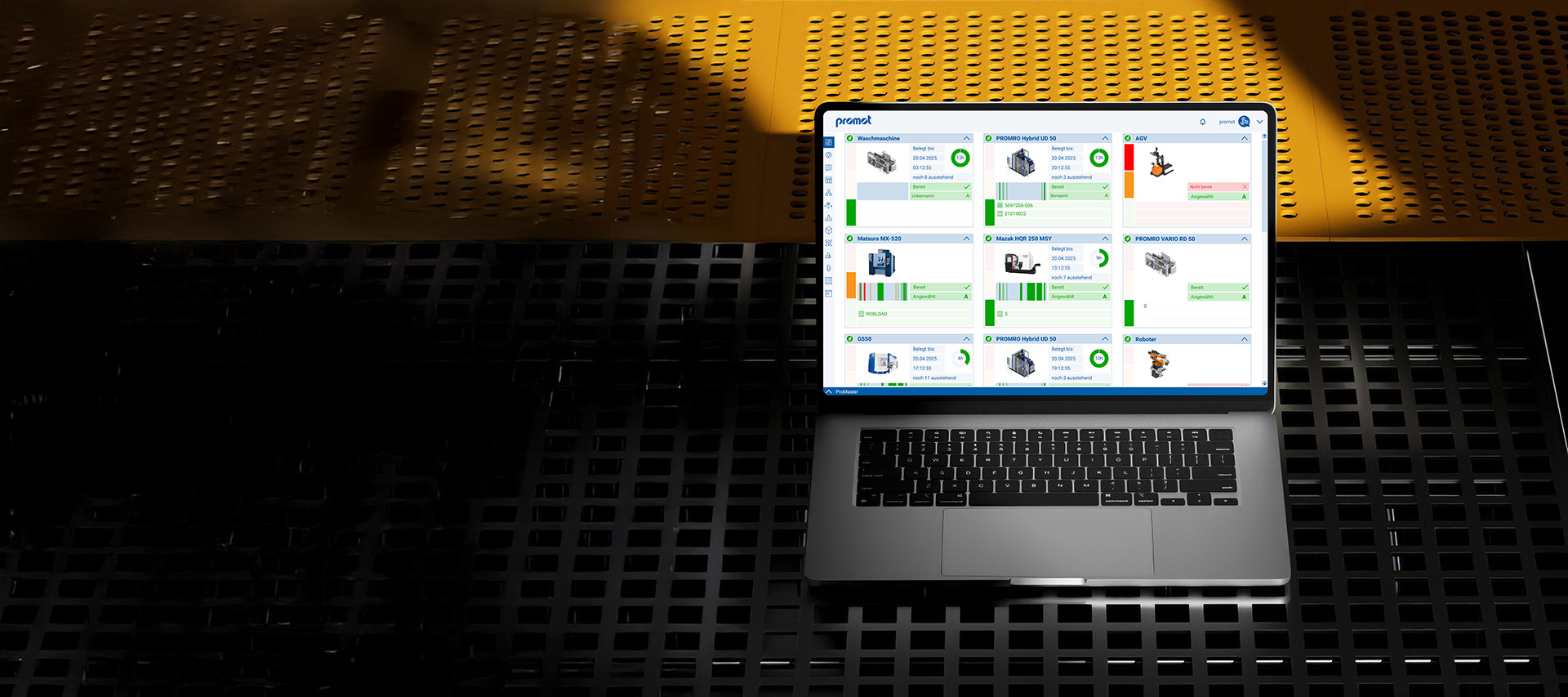
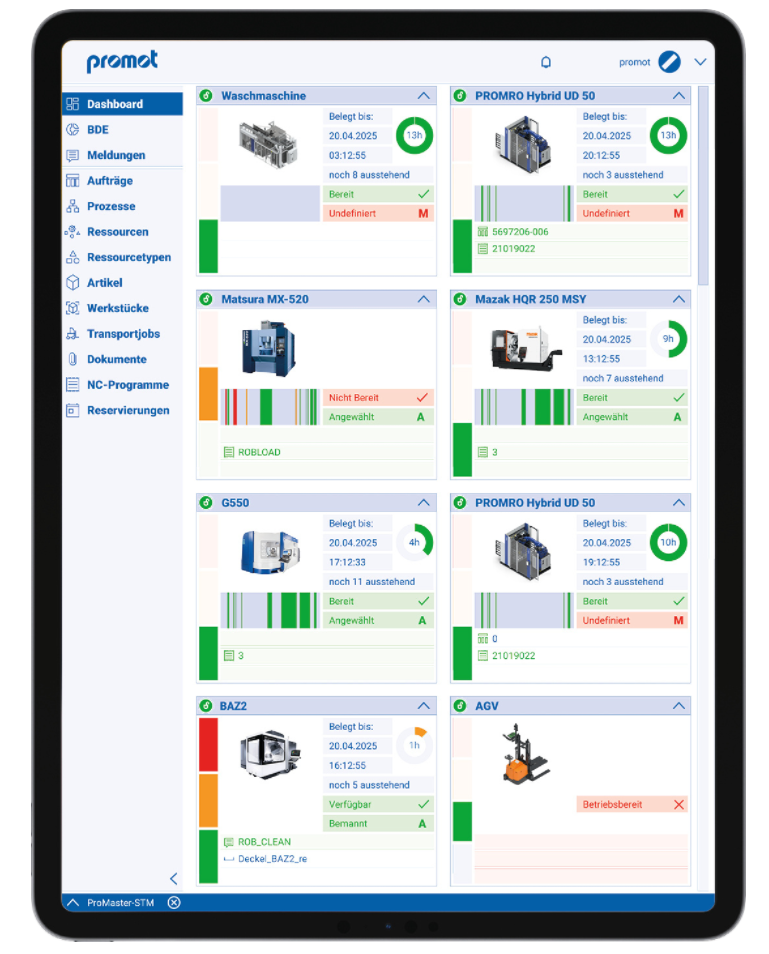
Very easy. The browser-based WebHMI interface allows you to control your entire production intuitively and clearly. All data is available with just a few clicks—also on mobile devices such as tablets or smartphones.